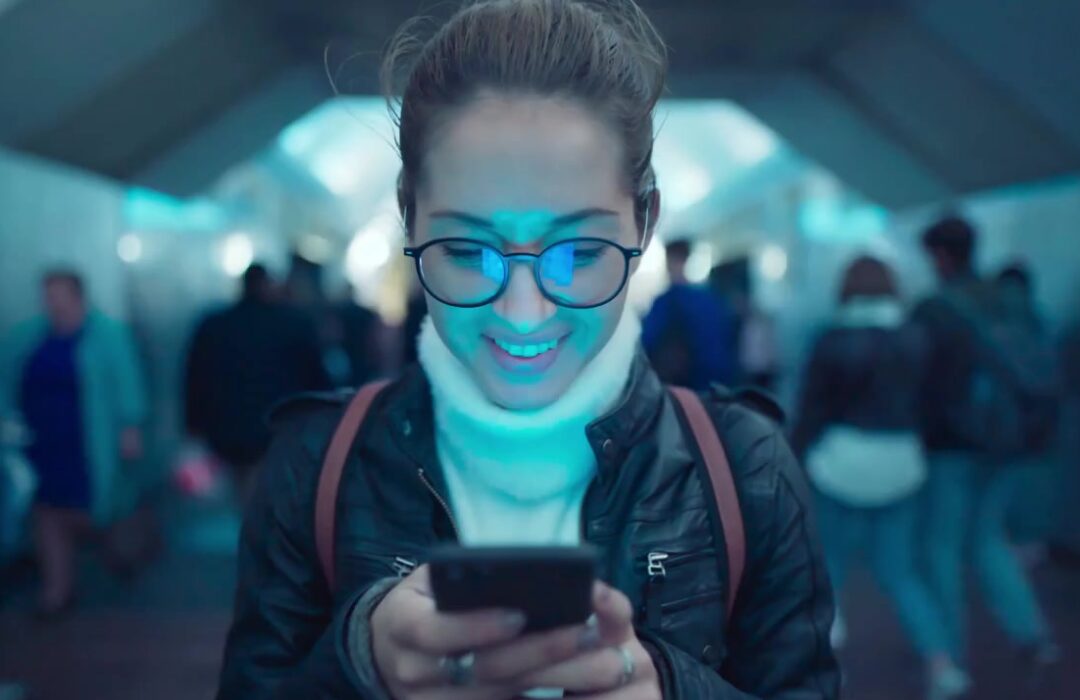
In an era dominated by unprecedented digital connectivity, the paradox of modern loneliness continues to escalate. While technology has bridged vast distances, it has also contributed to an increased sense of isolation for many. This emerging crisis of loneliness impacts mental health significantly and calls for a robust response from communities, health organizations, and technology.
How Loneliness Affects Mental Health:
Loneliness is not just a transient feeling but a pervasive condition with severe implications for mental health. According to Harvard Health Publishing, loneliness and isolation both contribute significantly to the risk of premature mortality, akin to well-established risk factors such as obesity. The article notes,
“Loneliness is not necessarily about being alone. Instead, if you feel alone and isolated, then that is how loneliness plays into your state of mind.”
This condition can lead to an array of mental health issues, including depression, anxiety, and a decrease in cognitive functions, ultimately affecting the ability to perform daily tasks and leading to an early death. (Read more). This deepens the understanding of how critical it is to address loneliness not just as a personal issue but as a significant public health concern.
WHO Loneliness Epidemic:
The World Health Organization (WHO) has recently declared loneliness as a global public health concern, underscoring its far-reaching implications beyond mere social discomfort. According to a report by The Guardian, the WHO has highlighted that loneliness significantly affects mental health and can lead to an increase in the risk of premature death, similar to severe physical health conditions like heart disease. This recognition by a leading global health authority marks a crucial step in addressing loneliness not just as a personal issue but as a critical public health challenge that requires collective effort and effective interventions from all sectors of society. The WHO’s initiative aims to foster wider recognition of the urgent need for comprehensive strategies to mitigate loneliness globally. (Read more)
“The mortality impact of being socially disconnected is similar to that caused by smoking up to 15 cigarettes a day”
Holt-Lunstad J, Robles TF, Sbarra DA. Advancing social connection as a public health priority in the United States. Am Psychol. 2017;72(6):517-530
Loneliness When Living Alone:
The increase in single-person households has been a notable trend in recent years, and with it, a rise in feelings of loneliness, especially among young adults. In her detailed exploration, Jessica Carter discusses how living alone can offer freedom and personal space, yet it often leads to a heightened risk of loneliness. Carter notes that “too much alone time can transition into loneliness, which has been linked to a variety of physical and psychological health risks, including depression and increased stress.” This situation underscores the importance of strategies that individuals can employ to maintain healthy social connections while enjoying their solitude. Ensuring a balance between alone time and social interaction is crucial, especially as more people opt for living alone.
TouchBase’s Role:
At TouchBase, we are acutely aware of the complexities surrounding modern loneliness. While technology has been both a boon and a bane in the fight against isolation, our mission is clear: to mitigate loneliness through meaningful digital interactions. We understand that no single solution can eradicate loneliness completely, as it is deeply woven into the fabric of contemporary life. However, we believe that by facilitating easier, more meaningful connections, we can make a significant difference.
TouchBase is designed to provide timely nudges and reminders that help bridge the gap between the intention to communicate and taking action. Our platform encourages users to reach out and maintain relationships, whether through a quick check-in message, sharing a memory, or planning a meet-up. These small yet powerful interactions can help alleviate the sense of isolation that many feel, providing a sense of belonging and community.
In conclusion, while TouchBase cannot solve the problem of loneliness on its own, our technology is developed to be a step towards a world where no one has to feel alone. By fostering regular, meaningful communication, we aim to help users maintain and strengthen their relationships, contributing to a healthier, more connected society.
“At the recent Tech Barcelona Afterwork event, our founder, Yohay Elam, had the opportunity to pitch TouchBase, emphasizing our innovative approach to combating modern loneliness. This event allowed us to share our vision with a like-minded community, sparking conversations about the growing need for solutions that foster genuine human connections.
Our Pitch.
We chose to focus our discussion primarily on the problem of loneliness, a decision that resonated deeply with the audience. By highlighting this pervasive issue, we sparked considerable interest in how TouchBase could offer a practical solution. This strategic choice helped us to engage the audience and set the stage for introducing our technology in a way that felt both relevant and urgent.
“Loneliness does not come from having no people around, but from being unable to communicate the things that seem important to oneself, or from holding certain views which others find inadmissible.”
Carl Jung | Memories, Dreams and Reflections, Page 356.
TouchBase is more than just an app; it’s a companion in the journey of relationship management. Our technology is designed to enhance personal efforts by providing timely nudges. These gentle reminders encourage users to reconnect, ensuring that relationships thrive even during busy times. Each prompt is crafted to be thoughtful and personalized, helping to bridge the gap between intention and action in maintaining connections.
Tech Barcelona’s Afterwork Event
The event proved to be an invaluable platform for us to unveil the concept of TouchBase to an engaged and insightful audience. It allowed us to not only showcase our vision but also to gather initial impressions and ideas which are crucial for our ongoing development. The interaction with the audience was incredibly enriching, providing us with a clear direction on how to refine our solution to better meet their needs.
The Spring Release: What to Expect
Looking forward to our spring release, we are excited about the potential of TouchBase to revolutionize the way people manage their personal relationships. Our tool will empower users to maintain vibrant social connections with minimal effort. We are committed to making our technology accessible and intuitive, ensuring that it becomes a must-have for anyone looking to enhance their relational well-being.
The presentation at Tech Barcelona’s Afterwork was a pivotal moment for TouchBase. As we prepare for our upcoming launch, our team is motivated by the enthusiasm and feedback received. We are dedicated to delivering a solution that not only meets but exceeds the expectations of our users, making personal connection management simpler and more effective than ever before.
Do no evil – that used to form part of Google’s code of conduct until it turned into “Do the right thing.” Meta (the parent company of Facebook, Instagram, and WhatsApp) never laid down such bold aspirations. Still, it is serving so many people that it is under constant public scrutiny and should try to right its way. That is not always the case.
Lotte Rubæk, a Danish psychologist who advised Meta on suicide prevention and self-harm, quit in anger and made serious allegations against the firm. She said the company turned a blind eye to harmful content and contributed to rising suicide figures. Rubæk said Meta uses such Instagram posts to keep users engaged and increase profits.
how to keep their users’ interaction and earn their money by keeping them in this tight grip on the screen, collecting data from them, selling the data and so on.
This is not the first time Mark Zuckerberg’s firm has been accused of favoring profits over the well-being of its users, and certainly not the only social media company or corporation in general that seems to prioritize profit over all else. A spokesperson said Meta is taking such issues incredibly seriously and constantly improving. I have no way to confirm or disprove these allegations.
One may say that this is the nature of capitalism and that it should be balanced by public outcry—such as the Rubæk’s stepping forward—or by regulation. These debates are out of the scope of this post and aren’t new. However, I want to focus on one important aspect—the business model.
When the product is free, you are the product
Meta makes its money from advertising, and to get more cash, it needs more users and for these users to spend more time on its platforms. This is a 100% legitimate model, but it can create the wrong incentives. When banks offered their workers bonuses for selling more mortgages, they indirectly incentivized lower standards. When Volkswagen managers pushed for sales of more Diesel cars, they indirectly incentivized cheating on emissions tests.
Can an advertising model remain clean? Sure, but there is a better way.
What about Touch Base? It is a for-profit company aiming to make money—not an NGO. I do not want to create any other impression. Nevertheless, the model is different. By adopting a paid model, the product is the application, not the user. And the user is a human who needs help reaching out and staying in touch, not another set of ad-clicking eyeballs that need to be optimized.
That marmalade made from craft beer looks yummy – and I cannot believe I haven’t eaten it yet. The jam was a gift from the regional government of Asturias, in the north of Spain, as part of its efforts to entice digital nomads to settle in that gorgeous corner of the country.
While I can attest to the area’s beauty and my good times there as a tourist, I doubt that pastoral Asturias can provide only happiness. Nor can Barcelona, Cancun or Dublin. There is a place for every person, but wherever you go, there you are.
I love traveling and exploring new places intensely. Spending a longer time in a city to get its full feel appeals to me. It allows me to discover hidden gems – for me, not places marked as “hidden gems” on Google Maps or Trip Advisor, which are not hidden, nor gems. I’m not the only one who enjoys getting the local feel.
The pandemic left a legacy of more remote working, which has allowed people to live comfortably at their place of choice without having to commute or live in an undesirable place. This flexibility is undoubtedly a great phenomenon.
That has allowed the phenomenon of digital nomads to blossom. One can work from anywhere, experience local food and culture, meet new people, and have fun. In my case, it is easy to find fellow volleyball enthusiasts, boardgame hobbyists, or keen runners. You can then have beer with these people and meet them again, perhaps for a highly Instagramable brunch.
And there lies the problem – much of the glory we see on social media is just the portrayal of an ideal life, which is only a sliver of the experience.
That pretty cocktail and a laptop with the beach as the backdrop make a perfect picture. It triggers many heart emojis, a reasonable amount of comments, and several hours of satisfaction. What happens afterward?
Physically, the digital nomad returns to their apartment and still needs to get some work done in conditions more conducive to productivity. And inside, posting on social media may merely be a desperate attempt to gain attention from friends back home – where one feels their sense of belonging. It is a reflection of loneliness.
The phenomenon of digital nomads has been blossoming, as efforts from Asturias has shown, but living such a life is not always as sweet as the jam.
The best predictor of physical health at older age is having strong close connections at an earlier age. We already knew that from Harvard’s long-running study and a famous TED talk. But there’s news.
An analysis of no fewer than 130 studies showed how loneliness increases physical frailty, leading to depression, cognitive decline and also falls.
Covid contributed to the phenomenon of loneliness, isolation, attention, and awareness of the problem. The pandemic drove the researchers to dive into material already available and analyze it.
Peter Hanlon, PhD, Heather Wightman, BSc, Marina Politis, BSc, Stella Kirkpatrick, BSc, Caitlin Jones, MBChB, Melissa K Andrew, PhD and other collaborators are behind the meta-study published in The Lancet on March 2.
While they defined loneliness as the “Subjective experience of feeling alone,” their measures are based on three different and well-established gauges. The researchers have not conducted a new field work, but using so many other studies makes their conclusions echo loud and clear.
Frailty refers to various forms of physical deterioration. Losing muscle strength increases the likelihood of falling, and the harm caused by tumbling down the stairs is substantial for older individuals. In turn, additional physical weakness contributes to more isolation.
Less loneliness can improve quality of life
There is no cure to old age – at least not for now. However, people live not only longer lives, but also better ones in recent years. Better medicine, simpler operations and better medical equipment helps millions live more fulfilling lives at an older age. Medicine alone is insufficient.
The lack of adequate social contact can lead to weaker immune systems and also an unhealthy lifestyle, which compounds the direct effects.
The links between the two are clear, and researchers suggest urge taking social vulnerability into account when conducting clinical and public policy.
Peter Hanlon of the University of Glasgow said:
Loneliness, for example, is not an easy problem to solve. However, there is more and more knowledge available about possible effective interventions, including activities that support older people to increase their social connections
At Touch Base, we aim to help older people increase their social connections with loved ones, most likely family members. There is more evidence of that need right now.
“Don’t scratch that mosquito bite” – we know the itch will only fester for longer if we touch it, but we have the urge to do so. Holding back is hard when your arm, leg, or head irritates you. The same goes for social media.
The internal trigger, or itch, to reach out to your phone and scroll social media is hard to resist. And once we are there, the optimized-for-engagement feed keeps us “scratching” for a long time. Yet the itch usually fails to go away.
I feel I am now addiction-free – abandoned the usage of Facebook several years ago and often open Instagram every two weeks or so. However, my presence on LinkedIn has materially increased. I’m not the only one.
Regarding entertainment, there are various social networks: Facebook, Instagram, and TikTok, with X (formerly known as Twitter) also playing a similar role. When it comes to the world of work – which most of us do – there is only one place to be, LinkedIn. Having one place to focus on career development, learning new skills, and catching up with colleagues, makes things easier. There is only one place to learn about somebody’s background.
Showcasing and showing off
Conversations on the blue platform tend to be more civilized, but elements resemble the other “big blue” – Facebook. People applying for jobs need to be out there, and some veer from showcasing real achievements to showing off minor ones.
There is also a creeping in of personal things into LinkedIn. The format is well-established – write something related to a hobby, better with a nice picture, and then find a loose connection to the world of work. To polish it off, provide “lessons learned” or a comment resembling a deep insight.
I am fully guilty of such behavior. I posted a picture from a marathon I ran – at least I wasn’t at my most photogenic moment – and tied it to AI, a hot topic. Of course, I provided my insight about the use of the technology. I’m not ashamed of that post, but it wasn’t special, either. Well, people congratulated me for completing the marathon, something that happened a year ago. Thank you.
LinkedIn and loneliness
Showing off on LinkedIn is not different from doing the same on Facebook or everywhere else. Sure, you get positive comments and lots of reactions. The unbearable ease of clicking Like or Celebrate erodes the “social proof” of such reactions.
Moreover, it does not add to social well-being but rather creates the same instant gratification that fades away quickly and requires a new one. It is not a nourishing connection that makes us feel happy, and attempts to use it as such are futile.
Don’t get me wrong – LinkedIn is extremely useful for professional development, making new connections, finding suppliers, learning new skills – and reading truly inspiring insights. A LinkedIn profile is a must for everyone who was not born rich. The most of us.
And like any platform, online or offline, a professional connection made on LinkedIn can turn into a lifelong friend. Everything is possible. But for friendship to occur – and maintain – a larger effort is needed.