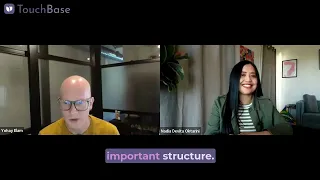
Loneliness is a growing problem and some are taking action all over the world. Nadia Devita Oktarini Artonne of Loneliness Global Action (LGA) discusses her background, the magnitude of the issue and lots more in a wide-ranging interview. This is part of the TouchBase Reach Out series.
You can watch the interview here, or read the transcript, lightly edited for clarity.
Yohay Elam (YE): Hi everyone. Thanks for watching or listening, and welcome to another episode of the Reach Out series, where we explore the intersection of human connection, technology, and mental well-being. I’m Yohay Elam, founder of TouchBase, an app that tackles loneliness by fostering meaningful connections.
And today, I’m deeply honored to speak with Nadia Devita Oktarini Artonne.
A structural engineer turned global changemaker, Nadia is the President of Loneliness Global Action, an organization taking on one of the most pressing issues of our time: loneliness. Their bold mission says it all: Within 10 years, no one in this world should be able to say, “I don’t know how to make friends.”
Welcome, Nadia.
NDA: Hi Yohay, and hello to all of you. Yes, the mission is bold, but it’s possible—and it’s urgent. Loneliness is not just a feeling; it’s a global threat. We believe the answer isn’t easy, but it is simple: togetherness. It must become a way of life.
I hope our audience stays with us to learn about our plan, because we need them. We need you to win this battle.
YE: Nadia, thank you very much for being here. Let’s start with your story. How did you go from engineering and business development to founding a global movement dedicated to solving loneliness?
NDA: Yohay, in life it’s important to know who you really are if you want to grow. Some people search their whole lives for this, and for me it took more than 30 years.
Since I was a kid, I’ve always been a fixer. I wanted to understand how things work and how to make them work better. I’m an INTJ personality type, so structure, clarity, and purpose have always mattered to me. That’s why I studied structural engineering. I didn’t just want to build—I wanted to build on solid foundations.
Later, I moved into business. Not pure sales, but business development and sales. I have always needed things to make sense, to have meaning and purpose. I even launched my own café—a space to bring expats and locals together. It was working until COVID hit. Like many others, I had to close down.
But one of my strengths has always been resilience. And for the mission I’ve chosen now, resilience is everything. Across all of my projects—from high-rise construction to brand campaigns—I kept asking: What are we really building here?
Because honestly, the world was starting to feel broken and disconnected. Yet I’ve always believed in the bright side of human nature. When cornered, we can evolve. We can show up for each other. We can heal.
That belief is what led me here. Not just to another job, but to a mission. And now I’m focused on what I believe is the most critical structure of all: human connection.
YE: Undoubtedly, it’s the most important structure. You’ve had such a rich career across sectors—from infrastructure to international marketing. But it seems that something deeper called you to focus on human connection. Was there a specific moment or realization that sparked the idea for Loneliness Global Action?
NDA: Yes. Behind my dedication—my devotion—there is a strong will.
Around 2019, life hit me hard. I lost my mom suddenly. My café, a business I had built with love, was forced to close, like many others during COVID. And I was stuck in a toxic relationship.
One by one, the pillars of my life crumbled. It felt like the universe was testing everything I had carefully built: my values, my limits, my foundations. And just as I had seen with my father years before, when things collapsed, many so-called friends vanished. Gone—like dust in the wind.
But I am resilient. I started asking questions—not just to myself, but to others: Have you ever felt lonely, even when surrounded by people? The answer was always yes. Young or old, rich or poor—it didn’t matter. Loneliness was everywhere, just hidden. And no one dared to name it.
So I did what I’ve always done: I studied the structure. I listened. I took notes. I mapped. I looked at emotion like a system: what builds it, what breaks it. I talked to strangers. I read. I kept reading.
One book I found recently expressed it perfectly: Wired for Love by Dr. Stephanie Cacioppo. She confirmed what I already felt: loneliness is physical, not just emotional. It changes your brain, your body, your health.
That’s when I knew—this isn’t just about me. This is a global emergency. And that’s how Loneliness Global Action was born. Not just to fix it, but to name it. To make it so loud it cannot be ignored anymore.
YE: Sometimes people get stuck in feeling shame about being lonely, when in fact it should be spoken out loud. How do you go about turning such a big vision—ending loneliness—into something actionable?
NDA: Let’s put aside innovation for a moment and talk about the problem itself. This giant we’re facing has clay feet. Loneliness isn’t some complicated disease. It’s not rocket science. It’s simply human connection—broken.
And Yohay, we are all born with the tools to fix it. This isn’t about elite solutions. It’s about common sense, empathy, and a shared need to belong.
That’s why we didn’t build a research lab. We are building a citizen-powered movement.
We’re talking about something that affects over 30% of people globally. Loneliness shortens six million lives every year. It’s as deadly as COVID, close to cancer, and twelve times worse than all current wars combined per year. And yet, no one is officially in charge.
So, we started local. After my partner GC’s TEDx talk, we launched our first chapter in France. Now, there are 10 countries on board, and we’re aiming for 100 by the end of next year. Anyone can start a chapter. All you need is to care and take the first step.
Then, we connected the dots: influencers—because they help shape norms; entrepreneurs—because they build real-world solutions. From this momentum, for example, Elephinity was born—the first European impact investment fund dedicated to socialization.
In fact, the founder, Nicholas Fantou, attended that same TEDx. Serendipity again. We helped inspire the idea, and now Elephinity is set to back over 10 ventures, already pre-selected, with more than €100 million.
So yes—it’s actionable. It’s on the move. It’s fast. And best of all, it’s human.
And to everyone listening: you already have what it takes to be part of this. You are human.
YE: It touches all of us—everybody living on this planet. What were the first steps you took to bring LGA to life? And how did others begin to rally around the mission?
NDA: When I say it’s a citizen-driven movement, it’s not just a slogan—it’s literally how it started.
After GC gave his TEDx Talk, a few people came to him right after and said, Let’s do something. No big plan, just a spark from the heart. That’s how the first chapter was born.
Then came the big question: What do we actually do?
We launched a petition. Just one post—from Noir Dorian, one of our co-founders and a well-known influencer in France—and boom: around 6,000 signatures in a single week. It called for the government to recognize loneliness as a public health emergency.
That’s when we realized: wow, there’s real fire here.
And then—silence. We sent open letters to ministers, even to President Macron. No reply. We understood we had to get louder.
And funnily enough, the real noise came from abroad. In Indonesia—my home country—the message hit home. Maybe because I’ve been active there for years and have more than 30,000 followers on LinkedIn.
Great NGOs like Into the Light Indonesia, Perempuan Muda, Tech Voice Indonesia, and others got in touch. People like Fita, a powerful mental health advocate, said, Okay Nadia, let’s open a chapter.
That was only about four months ago, and it exploded fast. Now there are 10 countries involved and even more candidates.
We had to slow down a little because, again, I’m an INTJ—I like structure and also safety. So now we’re setting up a funnel, onboarding tools, and a community playbook.
Just like a lean startup. But instead of creating profit, we’re building shared value. That’s the real capital.
YE: Let’s talk about the mission. That powerful line that caught my eye: Within 10 years, no one in this world should be able to say, “I don’t know how to make friends.” That’s super ambitious but also very inspiring. Can you unpack that a bit and tell us what it really means for you and for LGA?
NDA: You say it’s inspiring and ambitious—yes, for sure. But honestly, just sharing our mission statement out loud shows how absurd the situation really is.
Imagine bringing our ancestors back to life. They’d look at us and say: Wait, you built satellites? You cured diseases? You connected the planet with apps? But you forgot how to make friends? How?
Come on—we are humans. We are supposed to know how to do this. It’s literally in our DNA.
But here we are—swiping, swiping, swiping—just looking for someone to talk to. Meanwhile, scammers steal one out of every three dollars in the dating industry.
People—especially the young—are paying psychologists just to learn how to socialize. Why? Because fake lives on social media crush our self-esteem. We fear rejection. Cortisol kicks in, and boom—we’re trapped in a vicious cycle of loneliness.
I could talk about this for hours—I’m so passionate about it. But the reality is this: we’ve never had more ways to connect, and yet we’ve never felt more alone.
So no, I’m not saying everyone will magically have a best friend in 10 years. That’s not the goal.
What I am saying is: if we build safe, inclusive, real-life ways to meet—if we create serendipity—then we massively increase the odds for everyone.
This is about building the infrastructure for human connection. Local and global at the same time. And yes—it’s also a $2 trillion opportunity.
So let’s bet on it. Mark my words: five years from now, you will see the shift. If not, we are headed for a very, very dark place.
YE: So what are the core strategies and pillars that LGA is building to make that goal a reality?
NDA: At this stage, we share both values and dreams—but let me be clear: we are also grounded. As grounded as any strong structure should be.
As I said before, our foundation is the citizen. Not just symbolically, but structurally. Citizens are the ones starting chapters, joining for free, and bringing their voices to the table. Because if you feel lonely, it often means you don’t feel heard. And we want to fix that.
From that base, we are building three main pillars:
Citizens and lawmakers We connect people with those in charge. When citizens unite in large numbers, they become a powerful force. But it’s not only about influence—it’s about feedback. We want decisions to flow both ways: informing citizens about policies that affect them, while also pushing citizens’ voices upward to policymakers.
Collaboration with NGOs There are amazing associations out there, often with over 80% satisfaction rates. Their communities are happy, but they operate in silos, too small in scale. We don’t want to replace or control them—we want to link them together. As I like to say: we will break the isolation of those fighting isolation.
The private sector Workplaces, cities, healthcare—this issue touches everything. We want to identify what works globally, inspire startups, create jobs, and maybe even spark the next unicorns.
Holding all of this together, at the top, is our AI-powered global database. A shared tool, open to professionals, NGOs, governments, and most importantly—citizens themselves.
I can’t help but think like a structural engineer: solid foundations, strong bridges, and better blueprints for human connection. That’s what the world needs.
YE: Since we’re talking about engineering, are there any measurable milestones you’re tracking as you work toward that big 10-year target?
NDA: Yes. I understand the question, but honestly, we are a startup at heart. So yes, we love milestones, but we also love to adapt them along the journey. Don’t expect a rigid roadmap—there will be adjustments. I prefer to keep things zero-bullshit.
That said, we do have concrete goals. Our first milestone: 100+ active chapters by the end of next year. Bold, yes—but we’re already on track. With tools like LinkedIn, the right people are just a few messages away.
The next challenge is influencers—the ones who care. Many know they’ve been part of the problem, but they also want to be part of the solution. They can amplify citizen engagement, for example by driving petition signatures in every country.
So the KPI here is simple: Do governments listen? Do they move? When an idea becomes a movement, we’ll know.
From there, of course, comes crowdfunding—a huge lever. Just think of what was raised in France during Z Event 2024: 130 Twitch streamers went live for 50 hours and raised around €10 million in a single weekend—for the third year in a row.
Or look at Mr. Beast in the US, who raised $20 million just to plant trees. Now imagine that kind of energy behind human connection.
And to your point about measurement: yes, we’ll track everything—emotional impact, policy changes, funding, roles created. But here’s the real takeaway: loneliness costs the world $2 trillion a year. We’re not asking to spend more—we’re showing how to save money, save lives, and reclaim a piece of our shared humanity.
And we’ll move faster than most people expect—myself included. That’s very encouraging.
YE: There’s a lot of work here. How do you maintain momentum and belief when the mission is so huge?
NDA: You’re right—it’s fair to ask. How do you keep going when the mission is massive?
Here’s how I see it: the mission itself is huge, but the solution is natural. We’re not trying to build rocket ships—we’re trying to reboot something ancient: human connection.
The beautiful thing is that connection spreads like fire in a dry forest. And the world today is dry—thirsty for trust, for meaning. You light one spark, and if it lands right, it spreads. One person connects with three. Those three connect with nine. It multiplies fast.
So we’re not waiting for miracles. We’re creating moments—and those moments build momentum.
Most people are already online. Yes, it used to trap us, but now we’re flipping the switch—using the same tools to set people free.
YE: LGA treats loneliness not just as a personal issue, but also as a systemic one—as a public health challenge.
NDA: Honestly, I wish we could keep calling loneliness just a personal struggle. But that would be a lie.
Loneliness today is a public health emergency. It raises the risk of early death by over 25%—that’s more dangerous than smoking 15 cigarettes a day. It’s linked to heart disease, anxiety, stroke, even suicide.
And those are just the visible symptoms. What most people don’t realize is the economic tsunami behind it.
In the US alone, loneliness costs around $500 billion a year—from burnout and mental health issues to isolation in senior care. Globally, the impact is estimated at over $2 trillion every single year.
And yet governments invest almost nothing. Zero prevention, zero vision.
Even the announcements we do see are tiny. Take South Korea: a $13 million plan spread over several years sounds impressive—until you zoom out. Globally, public investment in loneliness is only around $200 million per year. For the whole world.
Meanwhile, we pour $2.7 trillion into military defense—defending borders while neglecting what really holds society together: trust, belonging, love.
Loneliness is quiet. Invisible. And that’s what makes it so dangerous. It creeps in, hollows people out long before any crisis makes the news.
That’s why Loneliness Global Action exists. Not to complain, but to make this issue visible, measurable, solvable. Because you cannot ignore the human core.
YE: Yeah. It’s such a huge problem. And the proportion of spending—that really shocked me.
NDA: It should.
YE: What have been some of your most impactful collaborations with governments or other institutions so far?
NDA: To be honest, governments don’t move at the speed of urgency—especially not when the problem is quiet and invisible. Loneliness doesn’t break windows or flood the streets; it breaks people silently.
So yes, getting public institutions to listen takes time. And working with NGOs isn’t always easier—the field is full of silos, and let’s be honest, there’s a lot of ego involved.
We’re still a young NGO. The kind of institutional partnerships that matter take time. Probably a year to become truly representative, maybe two to be recognized globally. But honestly, that’s already fast—and we’re on track.
That said, we are seeing encouraging signals. In France, in Indonesia—mission-driven NGOs, committed entrepreneurs, even city officials are starting to lean in. They see the vision. They get it. The impact is coming. We’re building it.
We just need a little more time—and maybe a few more loud voices.
YE: There’s this gap between a startup’s urgency and the slow pace of governments. How do you navigate that balance?
NDA: Who said we have to wait for them?
Yes, governments matter. Yes, we’ll build that pillar in time. But it’s natural: where the photos go, the policymakers follow.
Our priority right now is simple—show entrepreneurs, investors, and the public where to focus. Because the real key is the socialization market.
Remember, we are not just a movement to complain. It’s in our name: action. That means not one action for one group, but a global awareness effort—making loneliness impossible to ignore.
And let’s be realistic: most countries are in debt, economies are struggling. But look at how big issues like cancer are tackled: it’s the Pareto rule. Around 20% government + NGO, and 80% private sector. Why would it be different for loneliness?
We’re not dreamers. We’re pragmatic. We go where it’s efficient—where time is money and lives are on the line.
Don’t get me wrong, we’re not here to make profit. But yes—we are here to open the path for others. To build businesses that create millions of future jobs. Because let’s face it—with AI and automation growing fast, millions of people will lose their roles. And with that, their sense of usefulness.
And when usefulness disappears—loneliness explodes. We’re acting now, before that wave hits even harder.
YE: What can other countries learn from those already taking action on loneliness at the national level?
NDA: I don’t love this question, but let’s face it—it needs to be asked. Unfortunately, the lesson so far is disappointing.
Only two countries—the UK and Japan—representing just about 2% of the global population, have created a Ministry for Loneliness. And even that progress is fragile.
In the UK, for example, the ministry was downgraded into a simple committee. So was it symbolic? Yes. Was it effective? Hardly.
Still, we advocate for it. But let’s stop and look at the numbers: as I said earlier, the entire global spending on loneliness is around $200 million per year. That’s the equivalent of building 100 roundabouts.
Want another comparison? In the UK, that’s barely enough to maintain half the public gardens in London. What kind of impact can you really expect from that?
If governments want to learn anything, they should look at the private sector. When a CEO spots a leak draining billions, they invest at least 2% to investigate, and maybe 20% to fix 80% of the problem. It’s basic business logic. Why don’t we apply that to a crisis costing us $2 trillion a year?
The truth is, most politicians aren’t touched by loneliness. They’re surrounded by teams, constantly busy, purposeful. Demographically, they also tend to fall into the lowest-risk groups. So it doesn’t hit home. End of story.
That’s why the change won’t come from inside the system. It has to come from the people—from public pressure, from data, from evidence that solving loneliness isn’t just humane—it saves lives and cuts costs.
So far, not one country has really done it right. But here’s the good news: it only takes one to lead, and the rest will follow.
And I remain optimistic. We need to be.
YE: You mentioned the private sector and innovation. LGA also promotes ethical innovation—making sure tech supports connection rather than undermining it. What do you think needs to change in how technology is designed today?
NDA: It’s a tough question, but here’s the truth: most tech today isn’t designed to connect us—it’s designed to hook us. Apps compete for attention, not affection.
We’re not here to scroll. We’re here to bond. But dating apps and social platforms prove the opposite: people are swiping more but meeting less. What they call choice is really just noise. The result? Emotional burnout, disappointment, distress, and yes—more loneliness.
At Loneliness Global Action, we believe it’s time to shift from engagement at all costs to connection with intention.
That means designing tools that don’t just show you more faces, but that help you feel safe, seen, and understood. Safety is especially critical when online interactions move offline. We need tech that protects people—without tricking them or violating privacy.
And yes—it’s possible. We’re already exploring models that enhance user safety while staying compliant with global standards like GDPR. Security and dignity can go hand in hand.
Now, with AI entering the picture, the responsibility grows. AI can help people understand their emotions better, recommend local support, even flag risks of isolation. That’s powerful.
But we must draw a clear line: AI should support human connection, not simulate it. We don’t need robots pretending to be our friends. We need real friendships—with real people.
Ethical innovation is possible. But we have to choose it. And the first question every builder should ask is simple: 👉 Does this technology bring us closer, or push us farther apart?
YE: What principles should guide future innovation in this space?
NDA: I see three principles—and they’re non-negotiable.
1. Emotional Safety. Tech must stop poking at insecurities just to boost engagement. Emotional safety means users don’t leave your platform feeling worse than when they arrived. Sadly, that happens far too often. It’s about reducing social anxiety, avoiding manipulation, and ensuring no one feels disposable.
2. Long-Term Impact. We need to stop designing for dopamine and start designing for dignity. If a product connects people today but leaves them more isolated tomorrow, that’s not innovation—it’s a trap. Success should be measured in sustainable connections, not screen time.
3. Human Accountability. Tech doesn’t get a free pass just because it’s “neutral.” Every design choice—from algorithms to UI—affects real lives. Builders must be accountable not only to users but to the emotional ecosystem they’re shaping.
At Loneliness Global Action, we’re not anti-tech—we’re anti-harm. That’s why we’re developing ethical guidelines and certification programs, so platforms can prove they’re building for connection. Users will be able to see who’s truly on their side.
Those who follow our standards will be highlighted globally through our upcoming app and open database. That gives them visibility and trust—while significantly cutting their marketing costs.
If we succeed—and I’m confident we will—this becomes a major leverage for good business and a win for everyone.
Because as we said from the beginning: no one should ever have to say, “I don’t know how to make friends.”
YE: This isn’t something just one organization can solve. What kind of partners are you looking for, and how can individuals or institutions get involved in LGA’s work?
NDA: I really love this question—and the answer is simple.
👉 If your family, your friends, or your colleagues matter to you—join us.
We’re a citizen movement. Anyone can be part of it. Become a member—it’s free. If you live in a country where no chapter exists yet, start one. We’ll guide you through the process. It’s free, or very low cost—and that makes you a founder.
From there, we’ll work together to build it up. We’ll also help you find the right people: entrepreneurs, psychologists, sociologists, politicians—anyone who cares. And trust me, there are many.
If you represent an organization, come talk to us. Share your mission and your actions—we’re here to amplify. If you’re open to it, we’ll help spread your ideas to other countries too.
We’re not big on bureaucracy. Our one strict rule is respect. We have zero tolerance for anyone who harms others or our mission. Beyond that, we stay agile and human.
So we’re open to partnerships and sponsorships, in both directions. We’re here to build together, not to compete. Because solving loneliness isn’t about ego—it’s about the heart.
And everyone has something to bring to the table.
YE: We’re getting closer to the close. If there’s one message or shift in mindset you hope people take from this conversation, what would it be?
NDA: Loneliness is not your fault. It’s not a weakness, and it’s not a sickness. It’s simply part of being human.
We are wired for connection, but we live in a world that has scrambled the signals. Solitude can be beautiful—good for reflection. But chronic loneliness is different. It’s not dangerous like in prehistoric times when being alone meant death, but it is an alarm system.
As my friend Alexia Burk brilliantly put it in her book, loneliness is a “bastard feeling”—a signal that you need to reach out.
So here’s the key: you have the power. Name it, understand it, don’t be ashamed. And if you’re not feeling lonely yourself, don’t judge those who are. They’re not broken. They don’t need your pity. What they need is to feel useful, to belong.
Belonging isn’t about being surrounded—it’s about feeling in sync with your home, your workplace, your city, your world.
That’s why Loneliness Global Action exists—not to tell people what’s wrong with them, but to show what’s possible when we reconnect as humans.
So if there’s one message I’d leave you with: you’re not alone, and you don’t have to wait for anyone to fix this for you. You have a choice and a voice. You can make a connection. You can start something.
And if you want to go deeper—research, tips, or even to contribute—follow me, reach out. I share what I learn, and I listen.
This isn’t just my mission. It’s ours. Together.
YE: Is there anything else you’d like to share about your journey, your mission, or what gives you hope?
NDA: Maybe just one personal note: start with yourself.
Work on your self-alignment, because you cannot truly belong with others if you don’t first feel at home with who you are. You need to become your own best friend.
And that’s actually the topic of the book I’m currently writing. It all begins there.
YE: Where can people follow your work, learn more about LGA, or join the mission?
NDA: To get involved, you can find us on LinkedIn and Instagram under Loneliness Global Action.
Read our executive summary, sign up to join the movement. I imagine you’ll share the links in the comments.
We’re also launching an influencer-first strategy to make connection go viral—and for you to increase your followers and interaction. The metrics for Noah were incredible.
So yes, join us. Bye everyone, have a great life, and maybe see you in action with us soon.
YE: That was amazing. Thank you very much, Nadia, and thanks to everybody listening.
If you’ve ever felt disconnected, know that you’re not alone. Reach out, take a step. Remember—together drives the mission.
And yes—you can download TouchBase, check out our social media, and visit our website.
Thank you for listening, and see you next time on TouchBase: Reach Out.
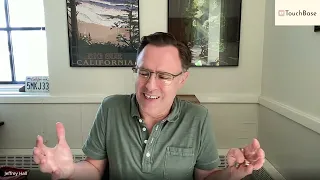
Friendship is not that easy, requiring nurturing and nourishing, not numbing. This is only one of the insights from an interview with Jeffrey Hall, Professor and Chair of Communication Studies at The University of Kansas.
The interview is below, followed by a transcript, lightly edited for clarity. See Hall’s book The Social Biome and follow him on LinkedIn
Hi, everyone. Thanks for watching or listening. In this episode of the Reach Out series, I’m excited to speak with Jeffrey Hall, a professor of Communication Studies at the University of Kansas and an internationally recognized expert on friendship, courtship, and mobile and social media. He’s spoken to major media outlets, so I’m very lucky to have him here as well.
And his book, The Social Biome, is coming out soon. I’m Yohay Elam, founder of TouchBase, which tackles loneliness by nudging and empowering people to reach out to loved ones. Hi, Jeffrey. Thanks for joining me today.
Jeffrey Hall (JH): It’s a pleasure to be here.
Yohay Elam (YE): Thanks. So before I get into the questions, I’d love to hear a bit more about yourself. Could you please introduce yourself and how you became an expert on friendship, loneliness, communications, everything?
JH: One of my very first projects in graduate school, when I was at the University of Southern California in Los Angeles, was on the differences between people’s expectations about friendship. Everybody expects something from their friends, but people vary in what they expect and what they want to get out of their friendships.
That was my first project. I did studies on gender differences in friendship, ideal expectations, standards of friendship, and how we enact that in relational maintenance. Those things took a bit of a backseat for a while because I studied courtship.
Then I got into studying social and mobile media through texting. My first study was on texting, then I did studies on Facebook and impression management, Facebook and self-presentation. I also did some of the early studies on what’s called social displacement—whether social media takes away face-to-face interactions.
I experimented with manipulating social media for well-being. At that point, these two areas came together because I’d developed a theory of social interaction, which includes both media use and face-to-face interactions. That led to a project that gave me a chance to speak to a big audience: how many hours it takes to make a friend.
That paper… I can’t even tell you how often it comes up. It gets tweeted, it was on Reddit recently as a meme, people on TikTok use it. It’s everywhere, which is great for me because I get to continue talking about friendship, something personally important to me.
YE: I see. Thanks. You mentioned social media, and this is a hot topic nowadays. Technology and social media are often blamed for social ills, including loneliness and worse. But technology also makes communication easier, and there are many different types of social media. What kind of usage would you say is nourishing for social connections, and which kinds are more harmful?
JH: To start with, every major technological revolution in communication has caused social panics. People were concerned about the telegram because people were getting married through it, never having met: “Oh my God, it’s destroying traditional marriage.” We saw this with the radio—radio was used for propaganda, but also to de-stigmatize groups and broaden reach.
Television was also seen as a downfall of civilization and conversation. So this is not new. This is a recurring conversation, and it’s important. New technologies make us anxious because we’re unclear how they’ll play a role in our lives.
Specific to your question: my research on texting and friendship really found that people use social media in very ordinary ways. Yes, there is hate speech and other terrible things, and that’s concerning. But the vast majority of users do very everyday things: they text friends and family, share pictures, make plans, send memes, share jokes, look at cat or baby pictures, watch the Olympics.
All those mundane uses are largely a net positive. They don’t move the needle much on loneliness or well-being, but they’re certainly not negative.
So I would say: insofar as your social and mobile media is an extension and complement to your face-to-face interactions, it’s nourishing and good. But if you’re using media to cope with bad circumstances, personal anxieties, or troubles, no form of media is going to help—not TV, not video games, not social media.
So social media sits on the razor’s edge between good and bad. It moves slightly to the good when it extends your personal life, slightly to the bad when it’s a substitute for face-to-face connection.
YE: I see. Making it an extension of life makes a difference.
JH: Exactly.
YE: And an extension of life includes work. Does our culture of efficiency keep us away from nurturing friendships—even contributing to loneliness?
My personal experience: I love running. I run in a group, but also on my own. Starting a run from my doorstep while listening to a podcast is efficient. Meeting a fellow runner and having a post-run beer is more social, but less efficient. Does efficiency contribute to loneliness?
JH: I think there are two ways to think about this.
One is that people who work more spend less time socializing. There’s a strong negative correlation between hours worked and face-to-face conversation. This holds across 20 years of American Time Use Survey data, and globally. People who work a lot don’t make time for relationships.
So we need to ask: why do people work so much? Why are we in cultures that prioritize work above all? Americans often look to Europe with envy—Europeans protect work hours, take longer vacations. Efficiency as sacrificing all other personal goals for career success is a real obstacle to being social.
The second way: friendships are not efficient. Spending time hanging out isn’t efficient—it’s about enjoyment, being seen, sharing experiences, challenging ideas. If we apply efficiency to social time, it ruins the flow of friendship.
Rather than treating friendships as efficient, we should see them as cultivating well-being, thriving, and growth. When we share ourselves without treating others as means to an end, we benefit both ourselves and others.
YE: So giving to somebody else is also giving to ourselves.
JH: Absolutely. Research on affection shows it’s often better to give than to receive. If you have a compliment, kindness, hug, or affection to give, you benefit more than the recipient. And the recipient also benefits. Listening empathically can be costly, but it benefits the whole relationship system.
So yes, we benefit by giving—but it’s also about our orientation toward what we’re doing when we’re social.
YE: Changing the approach. This brings me to another question. I feel so good when I reach out to someone I haven’t spoken to in a while. They’re thrilled to hear from me, which makes me even happier. It’s a virtuous cycle. But I don’t do it enough, and others I know don’t either. What holds us back from reaching out?
JH: There’s a new study in Nature Communications by Gillian Sandstrom and colleagues. She’s an expert on weak-tie sociality—talking to strangers, baristas, bus drivers.
They asked why people don’t reach out to old friends. The reasons: “I don’t know what to say. It’s been too long. Maybe they’ve changed. Maybe they won’t want to hear from me. Maybe it’s not welcome.” In short: it feels awkward.
She found that interventions work when people are reminded that social interactions are usually more positive than expected. People enjoy them more than they think they will. That mindset shift helps people reconnect with old friends.
What this suggests is that people have begun to contextualize old friends almost like strangers—which is a shame, because old friends have prior investment and can be reignited with a simple text.
So really, we need to change our mindset: reconnecting brings lots of benefits and very few costs.
YE: So it’s back to seeing it as something efficient—a small message that brings a big benefit.
JH: Exactly.
YE: We touched a bit on face-to-face versus technology. I read in one of your interviews that moving to a new place can trigger loneliness. That’s my experience as well. Should people focus on creating new face-to-face connections, or prioritize old connections online from previous places? Is there a balance?
JH: There’s no magic formula. I wish there were. Moving disrupts your routines—it’s like antibiotics disrupting a microbiome. It can be good, but it still disrupts everything.
Keeping in touch with old friends doesn’t really interfere with new friendships—they’re not mutually exclusive. Establishing routines with old friends helps keep them nourished.
On the new side: my research shows that friendships form relatively quickly if you take advantage of the openness people feel toward newcomers. Say yes to invitations, take every opportunity early, because the window of openness closes after a few months. If you wait, people assume you’re not interested.
So the answer is: try to do both, even though it’s difficult.
YE: Very interesting. You’ve mentioned time frames. Your research shows it takes about 200 hours to create intimate relationships. I feel with my high school friends, where we had strong bonding early on, the relationships are deep—even if we don’t speak for a year or two. With other relationships, without nourishment, they fade.
Is there a way to know when a relationship needs fresh energy?
JH: Elizabeth Dunn uses a great analogy: imagine you’re hungry on an island full of beautiful fruit, but for some reason you don’t eat it. That’s how social interactions are—we have abundant opportunities, but we don’t use them.
If you want to preserve a relationship, you have to prioritize keeping in touch. That can mean emails, monthly calls, birthday texts, annual catch-ups. Small acts matter hugely. But routines are hard, and we sometimes worry about imposing on others. We need to reframe that as giving, not burdening.
And sometimes loss is inevitable—friends drift away. But friendships can also be dormant, like the Resurrection Flower that blooms again when watered. Old friendships may look dead, but with a little nourishment, they reopen.
YE: That’s encouraging. Hopefully TouchBase can help with that. One more question before we wrap up. There’s more awareness now about loneliness—partly due to the pandemic, partly due to the U.S. Surgeon General calling it an epidemic. Do you think this awareness will reduce loneliness and increase reaching out?
JH: I hope so. I deeply hope so. There’s been a sea change—government interest, working groups, international initiatives. Nothing like this existed when I was in grad school.
I think there’s a hunger for closeness. People want to spend more time with friends but find it difficult. I hope awareness helps.
Nick Cave once said that hope is an active stance—you commit yourself to an ideal even if it’s hard and may not come to pass. That’s how I see it. If people adopt an active stance of caring for one another, that’s where my hopes lie.
YE: Very interesting. I’m also a Nick Cave fan—I’ll see him in concert in Barcelona.
JH: Woohoo.
YE: He keeps going.
JH: A lesser person would have been defeated by what he’s gone through. Yes, he keeps going.
YE: There’s a great documentary, 20,000 Days on Earth. Worth watching—he’s a very intelligent person.
Okay, thanks Professor JH for joining today. That was fascinating. I learned a lot. I’m sure everybody else did too. Is there anything else you’d like to add before we wrap up? Perhaps tell us about your upcoming book.
JH: I’d love to. The Social Biome, with Andy Morella, will be available at the end of January or early February. It’s already on Amazon for pre-order. It describes all the things we’re talking about—patterns, systems, obstacles to being social. I hope readers find it valuable. We end with a chapter on hope.
YE: Great, we’ll share the link as well. Thanks again, JH. And thank you everybody for watching. As mentioned, The Social Biome is coming out soon and you can pre-order it. You can also follow TouchBase on social media and visit gettouchbase.com to see what we’re building.
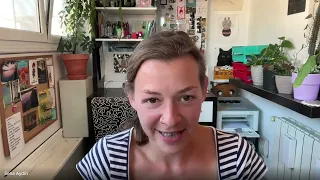
Technology made reaching out technically easier, yet fewer people make the move – and loneliness is a growing issue. I had the honor of interviewing Dr. Sena Aydin Bergfalk, a cultural anthropologist, UX researcher, and strategist, about these fascinating topics. This is part of the TouchBase Reach Out series.
You can watch the interview here, or read the transcript, lightly edited for clarity.
Yohay Elam (YE): Hi, everybody. Thanks for watching or listening. This is our first episode of a series called Reach Out. I’m Yohai Elam, founder of TouchBase, which tackles loneliness by empowering and nudging people to reach out to each other and to loved ones. And today, I’m excited to host, uh, Dr. Sena Aydin Bergfalk, a UX CX,, researcher and strategist, and a cultural anthropologist by training.
Thanks for joining, Sena.
Sena Aydin Bergfalk (SAB): Hi. Thanks for having me.
YE: Thanks. Sena, before we jump into today’s topic, Loneliness and Technology, I’d love to hear more about, you. Could you please introduce yourself, and tell us a bit about how loneliness became part of your, uh, professional journey?
SAB: Of course. So, I would say that I wear two main hats that you just mentioned. On the one hand, as a CX UX researcher, I provide user and customer insights to develop products, services, or brands. And, um, I’m also trained as a cultural anthropologist with a sub-disciplinary specialty in urban anthropology, which is my second hat.
So, under that hat, I examine the dynamics between urban design and municipal politics, and my work has been focused on Barcelona and the effects of the city’s municipal policies on its peripheral communities.
And I guess in the industry, urban design is usually associated with service design, but think, especially in the case of, touristic cities like Barcelona, they are talking about the commercialization of a city as a product, that, in the case of Barcelona, has been branded in very ethical terms, you know, such as sustainable, I don’t know, ecological, feminist, or participative, or what you have.
So, my academic work questioned the extent to which this ethical vision included the city’s peripheries and the peripheral residents.
Asking this question, I think, exposes one to the profound impact that social exclusion and lack of resources can have on individuals’ and communities’ well-being. And that
I haven’t specifically researched loneliness in academic or industry settings, but I also see it emerging, um, as a recurrent theme in whatever I do, not just as an emotional but also as a consequence of systemic issues and social injustices. But also, I think, as a byproduct of the high-speed, high-rhythm urban lives that we live.
YE: I see. Yeah. As we’re recording this, um, Barcelona is undergoing protests about tourism and, uh, it’s all, it’s all related. So, um, well, very interesting background. Uh, undoubtedly, urban life is a significant aspect. Uh, how does loneliness interact with other social issues, such as mental health, aging, and urbanization?
SAB: I would say that it is deeply interconnected with all the social issues that you just mentioned because, um, it is a social state or an emotion, which is entirely different than, for example, being alone, which simply means you’re just not in physical proximity to other people.
Rapid urbanization has created environments and everyday realities where we live in close proximity to others and frequently find ourselves in crowds, yet we often feel socially lost or disconnected, likely due to the fast pace of life. We have trouble forging meaningful social connections.
And I think that being the case, like you said, loneliness can worsen mental health conditions like depression, anxiety, or social anxiety. It can particularly affect older adults facing social isolation, and I believe it’s one of the most pressing but still somewhat invisible social problems in Europe, which is leading the world in the proportion of elderly population nowadays.
YE: Indeed. It’s a growing, uh, issue, and you studied the city here, and you’ve worked with policymakers. What do you think are the most important steps society, uh, should take to address the, the root causes of loneliness?
SAB: So in terms of, I think, policy making or thinking in the lines of policy making, I mean, of course an immediate answer would be, you know, boosting community building initiatives like community centers, public spaces or increasing accessible and affordable mental health services. But I think we also should realize that these are not simply policy interventions on paper.
Of course they look good on paper, but at the same time, they are also budget choices, um, that most policymakers are not willing to make or prioritize. But I think we also have to complicate this even further, and I would like to offer maybe two more thoughts on that.
First is kind of a fallacy that I see both in policy making but also in product development, which is that, um, that we believe that if we have the right tools, those right tools will automatically yield the desired results.
So, for example, in the case of urban policy, I don’t know, opening a community center doesn’t automatically make loneliness disappear or forge meaningful connections in and of itself. And I’ve seen, um, many municipal community building initiatives along these lines fail in Barcelona time and again during my research.
And I believe the reason for that is a kind of lack of concern about the end users and their needs-… which are never really independent of their social context, which kind of brings me to my second thought, which is that, you know, the root causes of loneliness, um, for example, that a young person can experience, might be entirely different than those that cause loneliness for an elderly person.
Or, you know, similarly, a peripheral working-class resident of Barcelona might experience loneliness differently than, say, a more relatively well-off expat living in Poblenou. And even the ways in which these people define loneliness might be completely distinct from each other. So, I think, unfortunately, there is not a one-size-fits-all type of solution, neither in product nor in policymaking.
But whatever solution, uh, we devise must be flexible and adaptable enough to diverse contexts and diverse people.
YE: I totally agree. It’s, um, yeah, in product it doesn’t work, “You build it and they will come.” You have to think
Yeah.
SAB: End users and their, how they live their lives outside, outside the products and outside, uh, um, the community center in this case. Um, from an anthropological perspective, how has, uh, community and social, uh, interaction, uh, evolved in recent years?
I think that, at least in recent years, we have been living in a paradoxical situation.
Because thanks to technological advances, we’re able to participate in global communities and have social interactions that are far-reaching than our immediate, physical circle. But then at the same time, we have never felt this lonely and overwhelmed at once. So maybe, like to put it in a different way, it’s like we gained an unprecedented level of breadth, of interaction thanks to technology, but then it came at the cost of losing depth of connection.
And it is to the point that, for example, there is something, uh, that is called social media detox now, which we all understand what it means.
It’s like the need to turn to face-to-face or one-to-one interactions. I mean, this in and of itself is kind of indicative of this paradox that we have.
YE:, It’s something, sometimes contradictive. What would you say are the biggest advantages and disadvantages of using technology?
SAB: I guess like I said, it has kind of a dual nature. I mean, it’s like I don’t want to throw it out the window or just limit it to social media when we talk about technology. And also, don’t get me wrong, it’s not, it’s not like I’m against social media, and like I’m an active user of most social media platforms.
But I think, we have to take it for what it is.
Meaning it mainly allows us to connect to others through consuming impersonal public content, and it is at the mercy of algorithms, more than anything. And this can lead to superficial connections, it can lead to cyberbullying, it can lead to unrealistic social comparisons between us and the lives of others, which then can aggravate the sense of loneliness.
But then it can also have the opposite effect. So, I don’t know, I’m like thinking of, for example, the #MeToo movement and how it addressed the loneliness that many women felt in the face of sexual harassment. Or if I were to give a personal example, I am a runner, and I like running alone.
I don’t like running with people. But at the same time, seeing other people’s running activities on different social media platforms designed for that, it kind of makes me feel like I’m part of an invisible community, and it actually motivates me to run better and more.
So, there’s also that. But then I think, besides social media, we should also value the power of technology in connecting people across distances. So, for example, now I can make an overseas call and talk to my parents with the same ease that I can just call my friend down the street, or I can monitor my grandmother’s health from miles away.
So, there are also other things that were unthinkable a few years ago, such as the fact that, for example, we’re now able to reach support networks or access resources like online therapy, for instance. So, I feel like it is tough to make a cost-benefit analysis when it comes
Advantages and disadvantages of using technology to alleviate loneliness. I think it’s a very kind of case-by-case situation.
YE: , I always find that technology makes things accessible, but it, it depends. I mean, the best usage depends on how we use it, I mean, to get the benefits.
How can technology be designed to better address the needs of those experiencing loneliness?
SAB: That is also very hard question. Um, so like earlier I talked about this concept of social media detox, right? And this increasing need to turn to more personal and personalized connections in a way. So, if I were to say something, I think it would be that the next technological move is to go beyond just simply facilitating any communication, but then focus on strengthening and using more personal types of communication between people.
That would be, I think, my answer.
YE: Sounds good. Um, so you and I met in an in-person event. We both run, but we didn’t meet, uh, running. And I see, I go to conferences, I go to meet-ups, I see a growing desire for these in, in-person events, people seeing each other physically.
SAB:, But many, but there are still tons of communities that thrive online. How effective are these virtual communities in providing general social uh, genuine social connections compared to face-to-face, uh, interactions?
I think virtual communities and social media can provide genuine social connections, so it’s not like they can’t at all, even though it’s rare. And it is especially I think the case for individuals, um, who might be geographically isolated, who might be facing social anxieties, et cetera. But at the same time, I don’t think that they are a direct substitute for face-to-face interactions, which they…
I mean, the face-to-face interaction has the power to offer much richer, I don’t know, non-verbal, emotional and sensory cues that we can only experience in the shared presence of others. So, I mean, we, we even experienced that, so we all have the firsthand experience of the difference between the in-person and the virtual during the pandemic.
That’s exactly what happened. The difference between in-person and virtual socializing is… I don’t know, it’s hard to kind of put it into words, but at the same time, it’s something that most of us will say, “Oh, yeah, you know, I know what you mean,” in, in
Because we all kind of do. We all, it’s more like we sense it. So, I guess we are social animals after all, and I think in that, our bodies are one of the fundamental engines of our sociality, which can never be, I think, fully replaced by, replaced or mediated by machines.
So there will always be something that will lack in that. And this is my anthropologist response, I think.
YE: We, as animals, haven’t evolved as fast.
We’re nearing the, the finish line, and I’d like to end perhaps on a higher note. What gives you hope and optimism about our ability to combat the loneliness epidemic?
Let’s see. I guess I’ll respond more like a social scientist to this question, and I would say that… I mean, I believe, like probably many other social scientists, that there is a power in naming things.
And if… I want to digress and give an example, so, I mean, we all know what PTSD is. It’s post-traumatic stress disorder. And as a term, it was coined in the ’70s, or as a condition, but then this didn’t mean that people didn’t suffer from the symptoms of PTSD prior to the 1970s, but it’s just that giving it a name made it easier to address its effects.
This is not going as far as to suggest that, um, naming creates the thing named, but then at the same time, it certainly does give it a public existence and makes it visible. So, the mere fact that you and I are now talking about loneliness as a thing, that it’s a problem, a condition, or a symptom, or a state, it is indicative of the fact that there is a growing awareness and visibility of loneliness as an issue, as a public health issue that, uh, can no longer remain receded, um, to the background in our daily social lives or in our interactions with, with technology, right?
So, I think this gives me the fundamental hope that we can combat it because we’re able to name it and see it much more clearly now.
YE: So even this conversation is a contribution
SAB: Yeah. I think so.
Thanks, Sena, for joining today. That was, fascinating. Really learned lots of new stuff. Is there anything else you would like to add before we wrap it up?
SAB: I would just say let’s not lose hope, and thank you very much for this opportunity.
Most welcome. Okay. So, thank you, everybody, for, uh, joining us today. Thanks, Sena. Follow TouchBase on social media we mentioned here and on GetTouchBase.com. Thank you very much.
When we launched Touchbase, our mission was simple help people reconnect effortlessly, without pressure or awkwardness. Over time, we’ve seen how powerful these gentle reminders can be in helping you reconnect with the people who matter most.
And today we’re taking Touchbase one step further, making it even easier to connect.
I’m excited to announce that Touchbase is becoming freemium, which means you can have one contact stay in touch with to get reminders on Free for Life so you can be in touch with that one most important person without having to pay anything.
Why? Because we believe people deserve a simpler, kinder way to stay close.
We can’t wait for you and those you care about to start experiencing it. Thanks for believing in us and keep sharing your stories. We love hearing them
Today is the day TouchBase is officially alive. After lots of back-and-forth, testing, simplification, and you name it, I am proud to announce that the versions for both iOS and Android are available for download.
This is an opportunity to look back at the origin story. I have been losing touch with people I care about all my life. Every time I reach out to someone I care about, I feel good. The other person feels good, and that makes me even happier. But despite knowing this, I don’t do it often enough. It made me wonder:
Why? And what can I do about it?
I took a deeper dive into the issue and found out two things:
I’m not alone. There are many people feeling this way.
It’s part of a much bigger problem in our world: loneliness.
Loneliness takes a toll on our mental and physical health. According to the American Psychiatric Association (APA), 30% of Americans report feeling lonely. U.S. Surgeon General Dr. Vivek Murthy has emphasized the severity of the issue, stating that loneliness poses health risks comparable to smoking 15 cigarettes a day.
In our digital age, we have more ways than ever to connect, yet many of us feel more isolated. The rise of online distractions has made it easy to lose touch with those closest to us. I realized that the tools meant to keep us connected were, ironically, making genuine connection harder.
What is TouchBase?
TouchBase helps you stay in touch with loved ones. It empowers you to reach out, maintain, and deepen these connections, turning them into something truly meaningful. The inaugural consists of:
Gentle Reminders: TouchBase is an intuitive mobile application that sends you reminders to reach out to loved ones via text messages.
Personalized Suggestions: It suggests which messages to write, helping you get unstuck and overcome the feeling of hesitation and awkwardness.
Seamless Integration: It uses your favorite messaging apps, making the process easy and familiar.
Think of it as a personal trainer for your social well-being.
If you’ve ever felt the distance growing between you and the people who matter, I invite you to give TouchBase a try. Let’s make the world a little less lonely, one message at a time
We are thrilled to share some exciting news about TouchBase’s development journey. After months of hard work and dedication, we are moving into the closed beta phase soon. Here’s a look at our progress and how you can get involved.
Sweat and Code
At TouchBase, our team has been tirelessly working to bring you an app that makes maintaining personal connections easier and more meaningful. We’ve reached several significant milestones, from developing key features to fine-tuning the user experience. Each step of this journey has been driven by our commitment to creating an app that truly meets your needs.
“Great things are not done by impulse, but by a series of small things brought together.”
-Vincent Van Gogh
Tested and Tweaked
Usability testing has been a crucial part of our development process. By conducting these tests, we’ve gathered valuable feedback from users, helping us identify areas for improvement and ensure a smooth, intuitive user experience. The insights gained from these tests have been instrumental in refining TouchBase, making it more user-friendly and effective.
Fine-Tuning the Future
We are incredibly happy with the current state of TouchBase. The app is functioning well, and we’re continuously working to enhance its features and performance. Our goal is to deliver the best possible experience at launch, and we are confident that we are on the right track.
Be Part of the Beta
As we move into the closed beta phase, we are looking for people interested in beta testing the app. This is a fantastic opportunity to get early access to TouchBase and provide feedback that will shape the final product. If you’re interested in being part of this exciting phase, please sign up [here]. Your participation and insights will be invaluable in helping us perfect TouchBase.
Wrapping Up
We are excited about the progress we’ve made and can’t wait to share TouchBase with you. Stay tuned for more updates as we move closer to our official launch. Join us in this journey and be a part of the TouchBase community. Thank you for your support and enthusiasm.