“I felt like I was about to pass out” – that is what Simone Biles said before participating in her first event in the Tokyo Olympics. The most decorated US gymnast in history struggled with mental health issues at age 25, and she told it to the entire world.
Biles was not the first famous person to confess mental health issues and not the last. It has become much more common for younger people to tell surveyors about such struggles, and talk about it. Not only Gen-Z Americans are becoming more open about pressure, but also people in other countries and of different ages.
What about social health? The pandemic undoubtedly caused isolation and loneliness. Doctors wanted people to refrain from spreading the disease to each other, and used the term “social distancing.” This was later criticized by some, who saw it as a call for isolation from one another, while technology could keep us both safe and connected. Perhaps “physical distancing” would have been a better term.
While covid is seemingly confined to the past, awareness to mental health remains prevalent – and social health may come to the fore. Touch Base will certainly do its best to shed light on the topic.
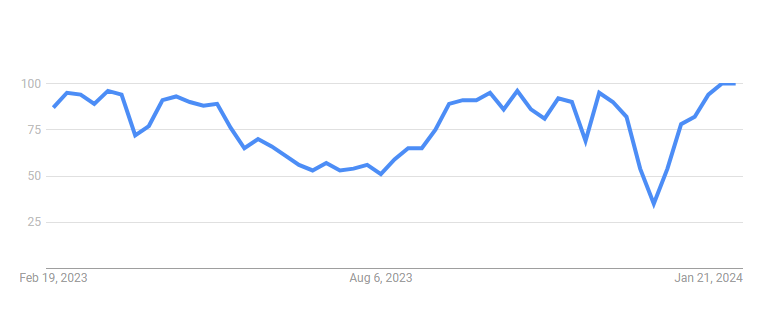
According to Google Trends, searches for social health are at their highest in the past year, but have not broken to higher ground.
Having meaningful relationships is critical to physical health later in life. This is a well-demonstrated point made by a multi-decade Harvard study. In my work on Touch Base I have run into this research over and over – making it one of the top encouraging me to pursue this venture.
Here is the TED talk explaining the study:
The repeated mentions of this study show there is a growing awareness of social health and its importance. I will circle back to it – and also provide additional insights – about the importance of social health.
Fresh air – that is the headline I give short runs on Strava which are short breaks from the hustle and bustle of daily life, full of interactions. Sitting on the sofa, watching a TV series, or going to run like me, we all need some time on our own. Being alone – or solitude – does not equal loneliness.
Nevertheless, it rises as we age, turning from short breaks to air our mind to longer spells that could turn into isolation. According to Our World in Data, Americans’ time alone rises with age.
Reitrement from work and an emptying nest make way for more time, which is allocated to more time with a partner – but even more time alone. Those who do not have a significant other at that stage in life may feel more lonely. Being in an unfulfilling relationship is likely worse for one’s social and mental health, but that is a story for another post.
In our initial explorations, we found that reaching out to aging family members touched a nerve, much more than any other form of staying in touch. At least among visitors of this page, it seems that loneliness outweighs solitude among older people.
I live in Barcelona, Spain, a developed country where the median age is among the highest in the world. Metro stations often feature ads showing elderly people staring out the window, and the writing says that loneliness is the thing they least expected when approaching this stage of life.
While some have a partner at this age and some do not, almost everybody has younger family members or friends. Touch Base can help us reach out to our older loved ones – and also the other way around. In 2024, a growing share of senior citizens feel comfortable with mobile apps. Nevertheless, I strive to have the easiest app to use for every age. Design patterns that are geared toward a segment of the population with special needs often becomes the mainstream. Big buttons screaming “click here” are now the norm.
Alone or lonely? It all drills down to choice. Goign for a breath of fresh air to be alone should be a choice, not an undesirable situation, which is loneliness.
“I was so happy to hear from you” – receiving such a message from that smiling friend or family member creates so much satisfaction. A simple effort has a dual positive effect. So, why don’t we do it more often?
That is what I tried to find out about myself and then expanded it to the people I interviewed. The findings below help me build Touch Base – the first version is due in the spring.
Feeling that the relationship is mutual is the No. 1 enabler of staying in touch. If you are at least in the space between the two of you, reaching out is a no-brainer. Feeling comfortable is key in all relationships, from random people to colleagues, through all types of friends and to your closest family members, yet this common sense is often overlooked.
Overcoming inhibitions and instant gratification
Then comes the more exciting trigger – “something random,” as someone described it. That person reached out to a long-lost friend after viewing a movie about that friend’s country. The trigger may be related to the other person or the relationship. Another example I heard is that someone passed by a restaurant where both had a special dinner together. Walking by the restaurant triggered a message that turned into a revival of the relationship.
At Touch Base, we aim to tap into such tidbits and create the magic that breaks the ice – and unleashes us from our inhibitions.
Lacking something “special” to say often stops us from reaching out. That other person didn’t respond to our message a year ago, and we feel it would be too weird to reach out. “Just do it” is my answer to a friend who feels unable to reach out. But that is easier said than done – I am better at giving sensible advice to others than applying the same advice myself. Are you like me?
Other inhibitions are more mundane, such as lacking time due to raising young children, a new job, a new relationship, etc. Or, we are just too distracted with too many things competing for our attention. We seek a sense of belonging in social media, but it never fully satisfies us. That is a topic for another post.
Another reason not to reach out is the physical distance. We are in 2024, a long time after the internet made it too easy to reach out by message or phone. However, having the ability does not mean we use it. Apparently, it is easier to contact somebody you can meet or do an activity with than somebody you are unlikely to encounter anytime soon.
These findings go some ways to explain why we don’t reach out. Nevertheless, in a world of instant gratification, we still hesitate before hitting the Send button to a loved one. New technology is needed to overcome the inhibition gap.
There’s this virus going around Asia right now, so it must be an excellent time to buy tickets to go there as prices are low – those were my thoughts in early 2020. The flights I bought were canceled.
Everybody has their “where were you” moments from the outbreak of the Covid-19 pandemic and many are still traumatized by the illnesses of loved ones or by the garden variety of lockdowns and their consequences. They say that every crisis is also an opportunity – for things to get worse or get better. I’ll focus on the positive side, exchanging messages and asking our loved ones if they are alright, have enough supplies at home, and how they are coping.
We touched base big time, or did we? I remember many reaching out and being reached out more than usual, but I know that some people felt lonely, and not only those living on their own.
After the dust settled from reorganizing life around lockdowns and the initial rush of messages, there was one thought that came to my head and stayed there. I wish I had Touch Base now.
An urge to return to the familiar, not stay in touch with family
The covid waves that followed the big one beginning in March 2020 were more traumatic for some, and triggered harsher lockdowns for others. However, they did not bring us together like the initial one, especially the first few weeks. Moreover, when life was on a bumpy course to normality, we all insisted on getting back to 2019 rather than learning any lesson. It is human – having a routine means a semblance of certainty we all needed after long months and, eventually, a couple of years of uncertainty.
Certainty and familiarity consisted of a return to the rat race, and also to being triggered by social media. Short entertainment snacks never left us, but as our free time returned to normal – less than during the lockdowns – spending time on social media occupied a larger proportion of that free time.
I felt that I lost touch with some people in wider circles, but more importantly, that I wasn’t holding onto those closer to me. In challenging times, we rise up and reach out. But in regular times, holding onto the habit of reaching out is challenging.
That’s what we’re aiming to change. We bought tickets to this journey called Touch Base and we’ll make sure it takes off. Stay tuned.
But here we are – a new year is a new blog. Social wellness is a central pillar in mental health and also helps us stay physically strong. Acknowledging the need to stay in touch is one thing, and taking action is another. Once you overcome the hurdle of reaching out, can it become a habit? That is the issue with New Year resolutions in general and staying in touch in particular.
Success in maintaining a new habit requires the right tools. Does a tool that helps staying in touch exist? Yes, just use Google Calendar or any other reminder system. But that is not enough – staying in touch is hard and loneliness is a growing issue. We believe this issue is worth tackling with new approaches.
In 2023, we have explored the space by various means, most notably our exploratory page on Touch Base homepage. Our New Year’s Resolution for 2024 is to develop and launch, already in the first quarter, a new tool that helps people nurture connections and improve their social well-being.
In this blog, we will provide updates on our progress toward building such a tool to stay in touch. It will also include tips about staying in touch, musings about research and developments in the field, and more.